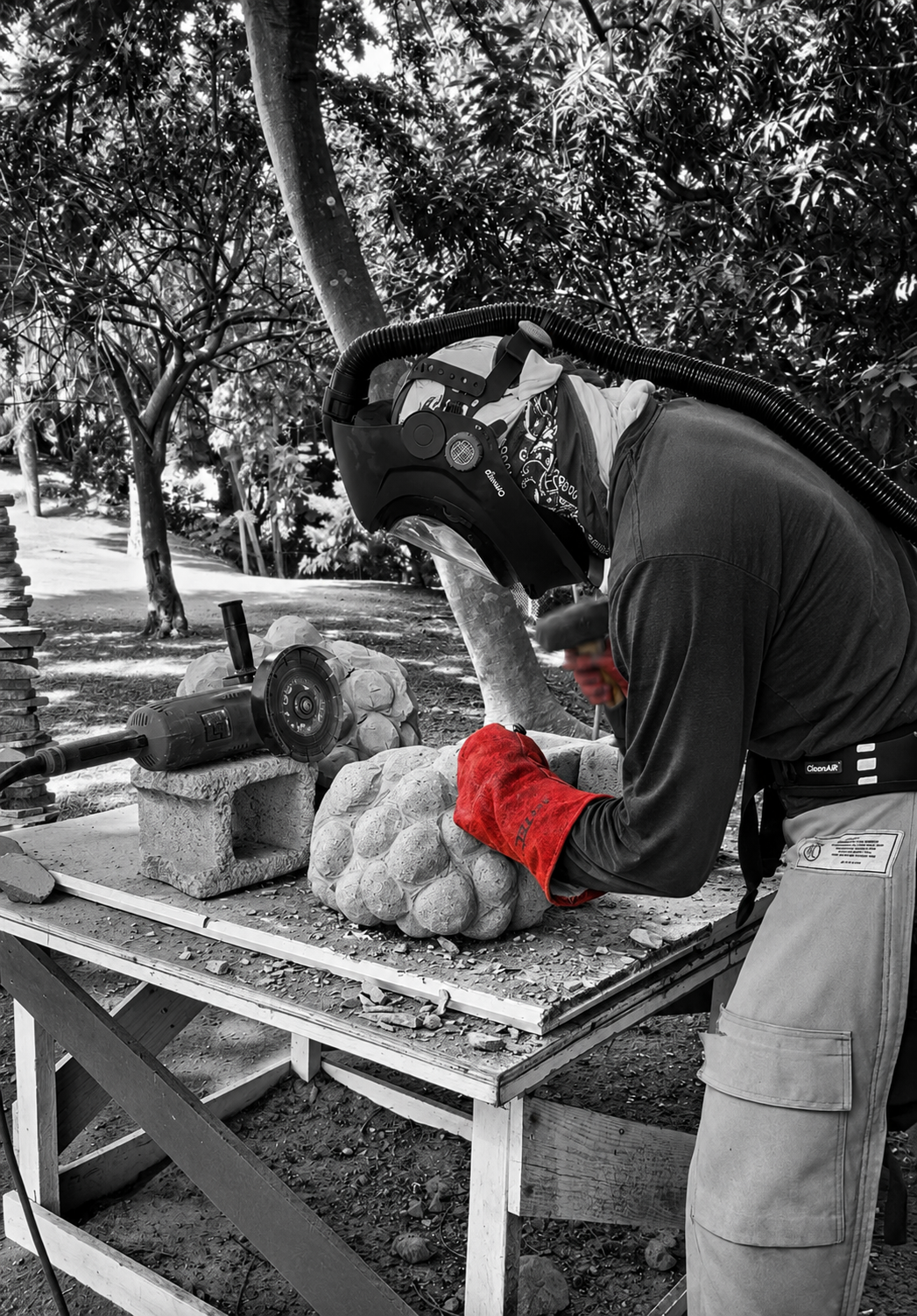
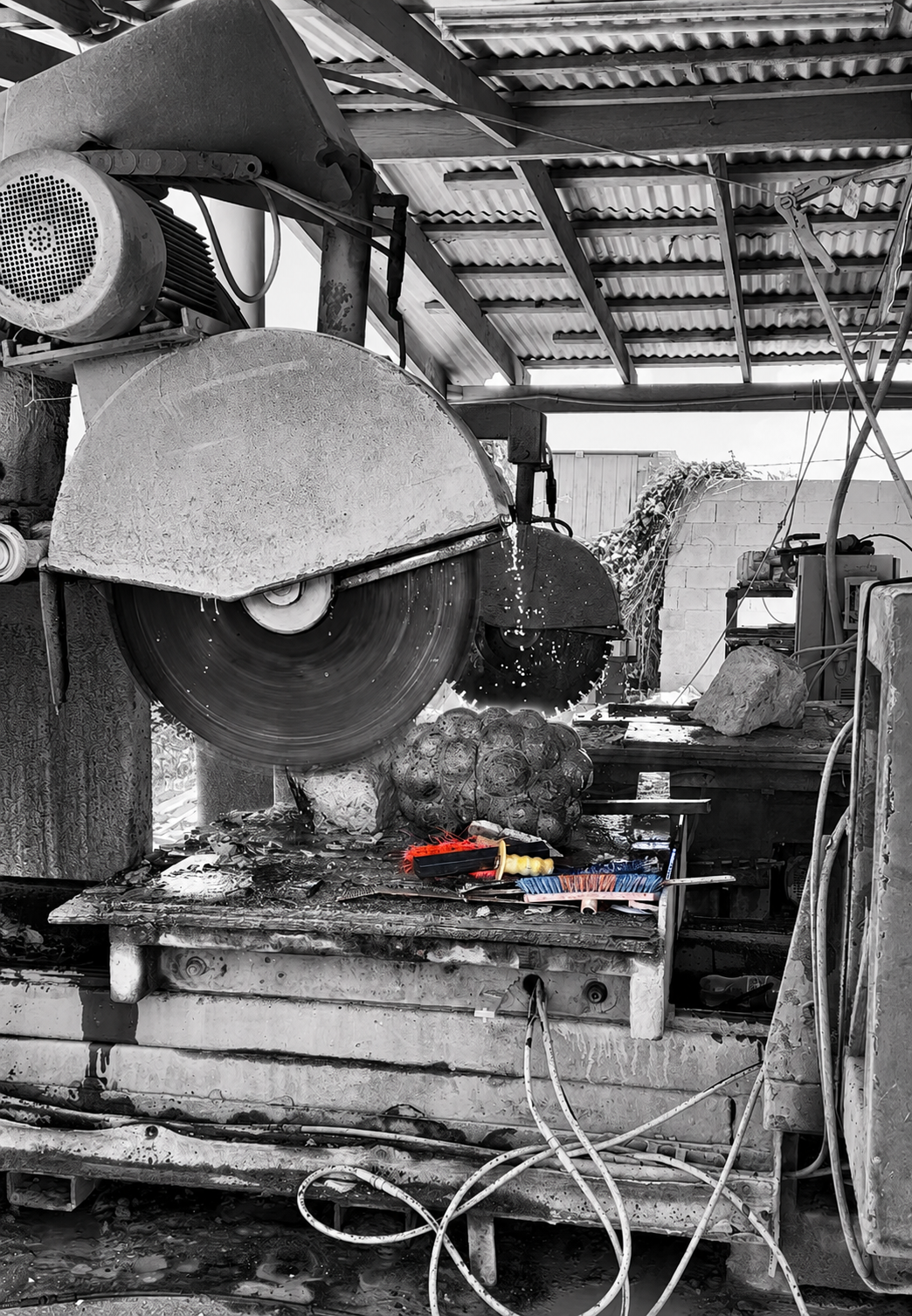
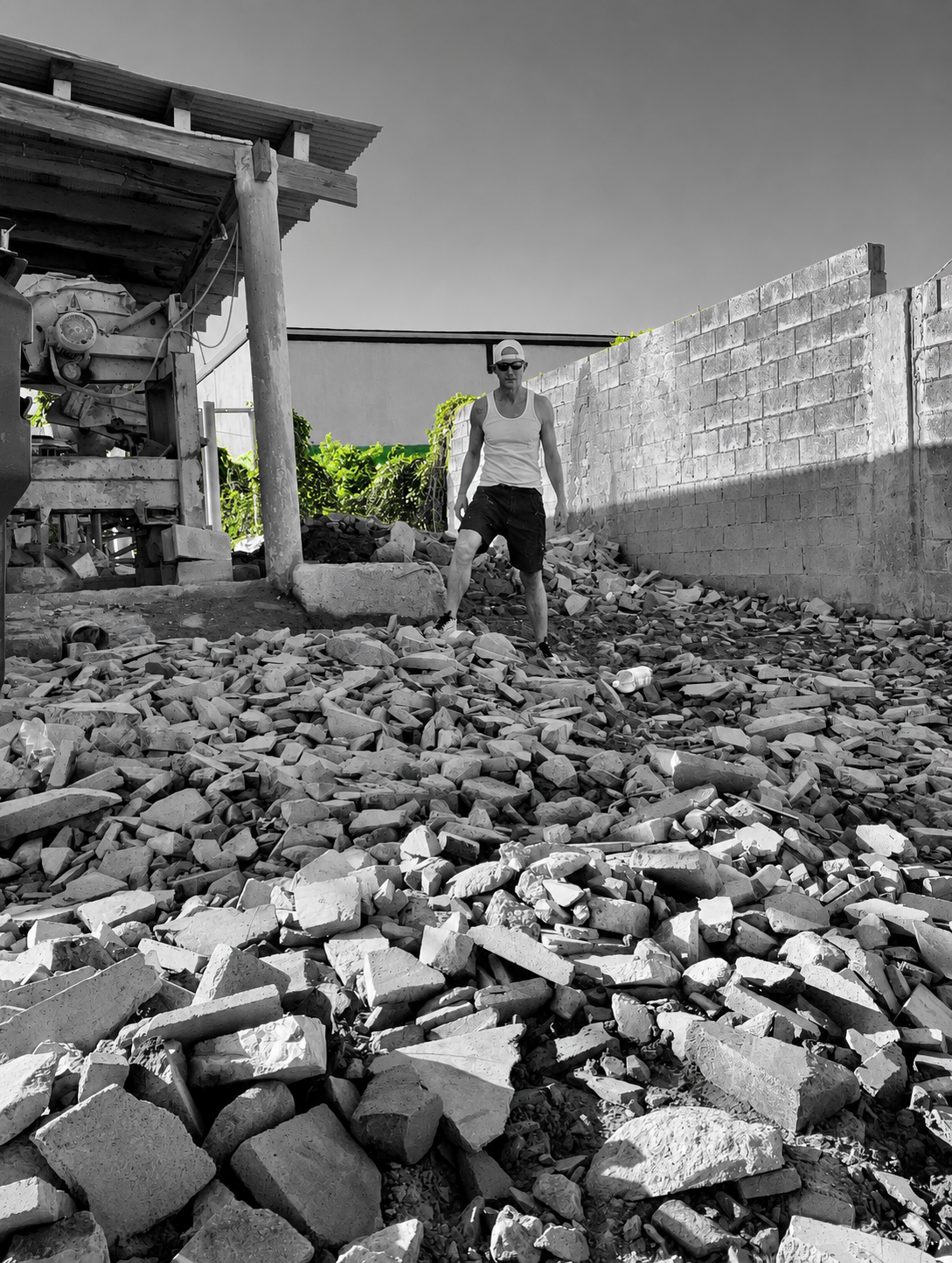
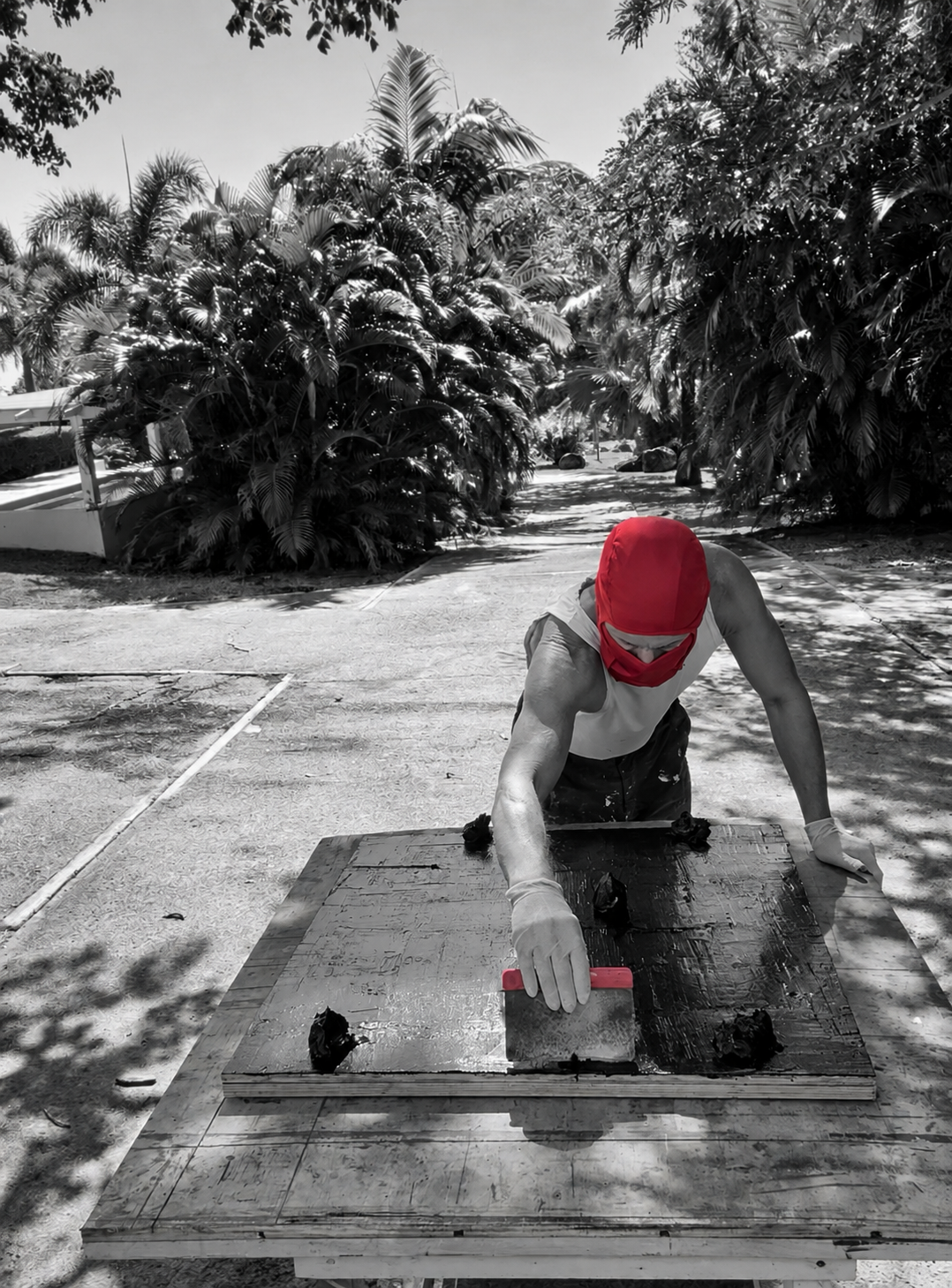
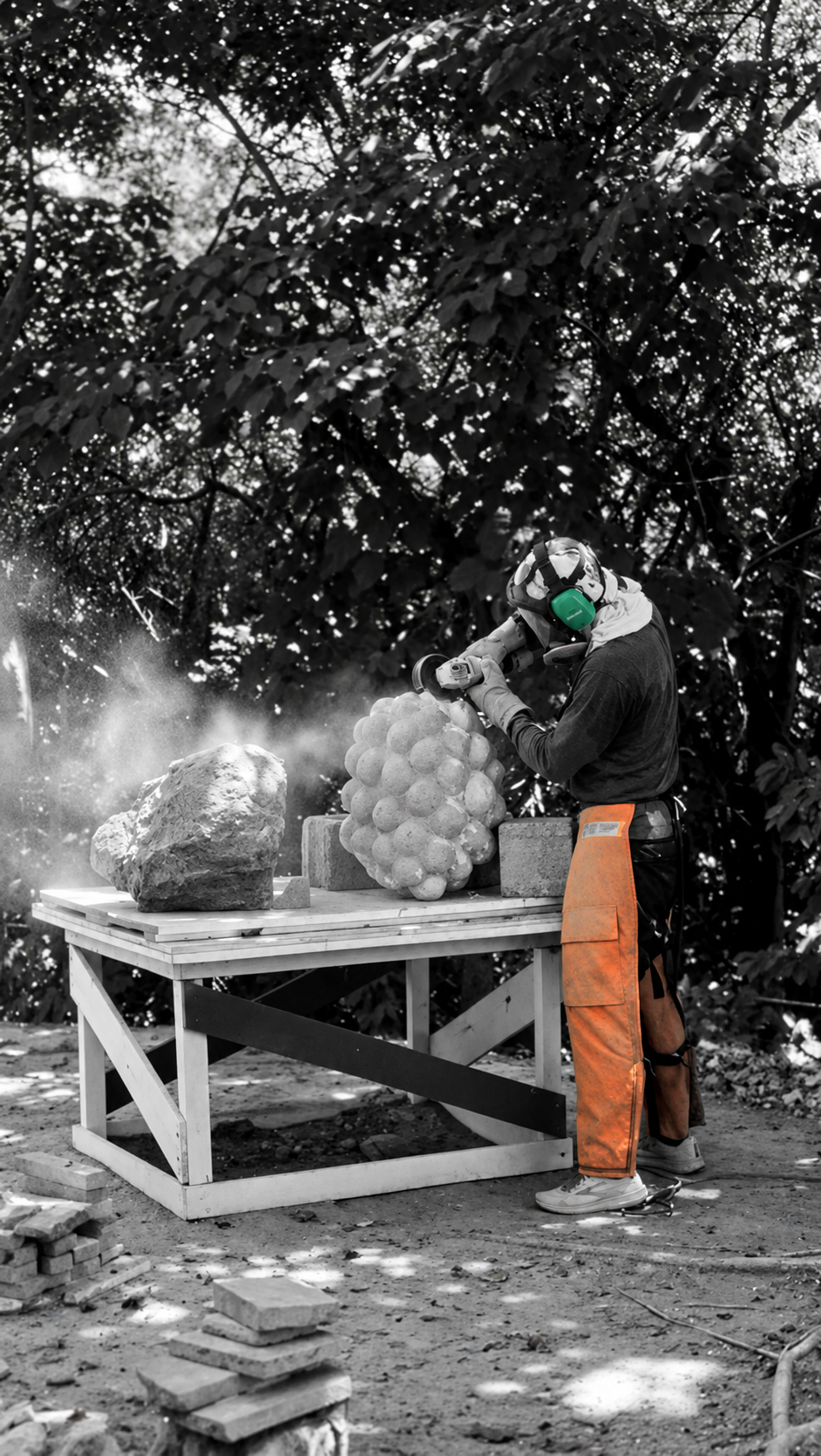
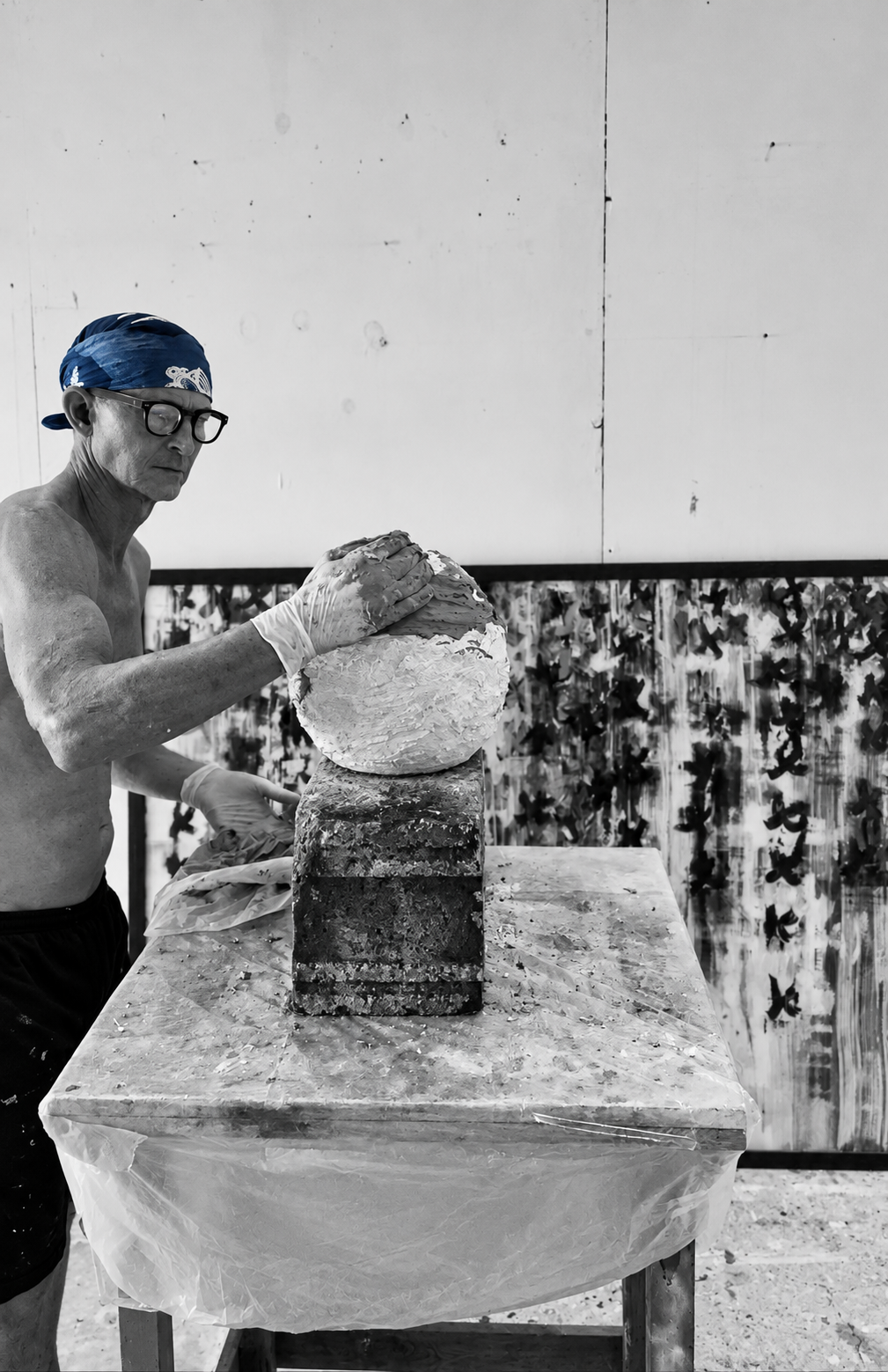
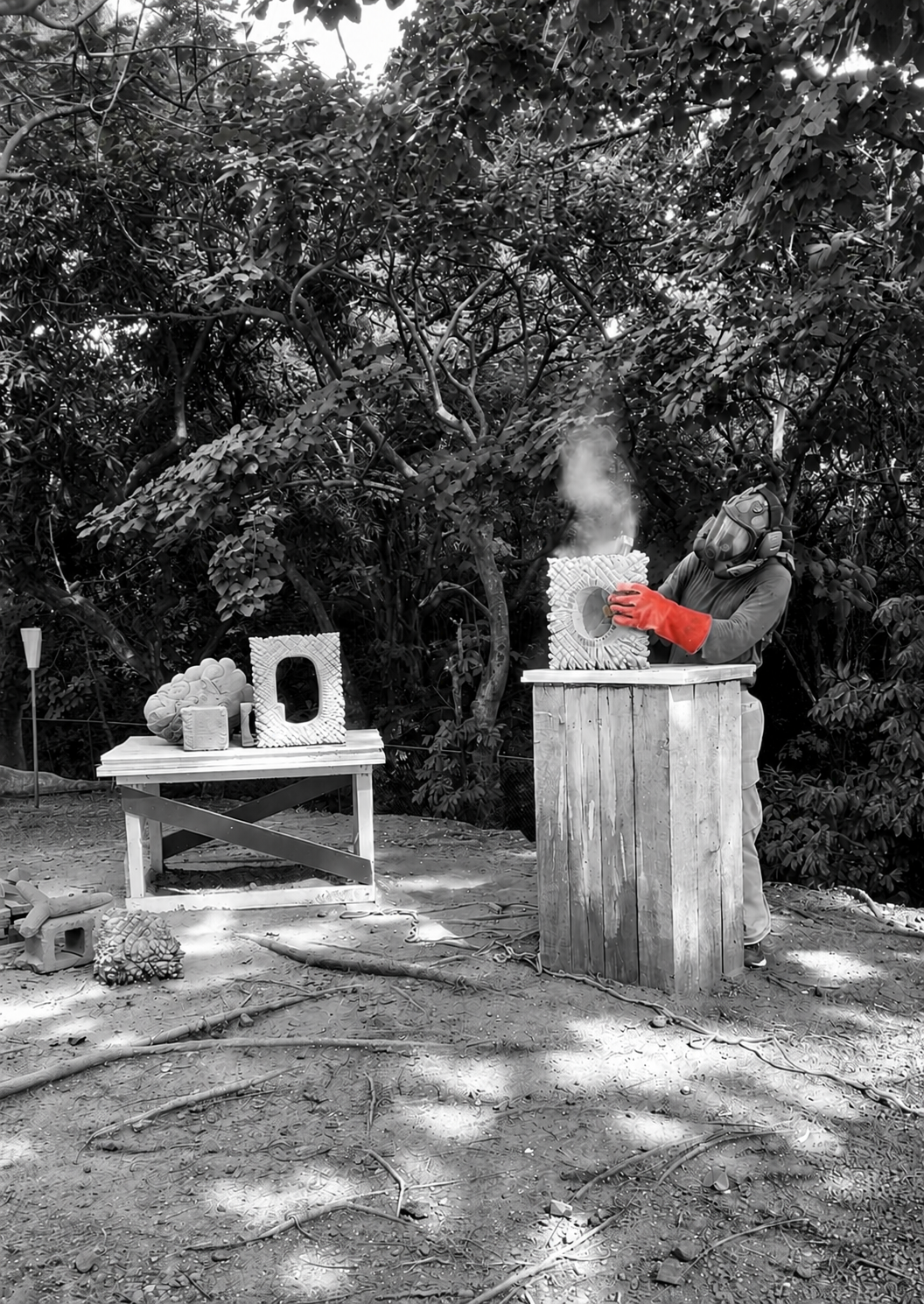
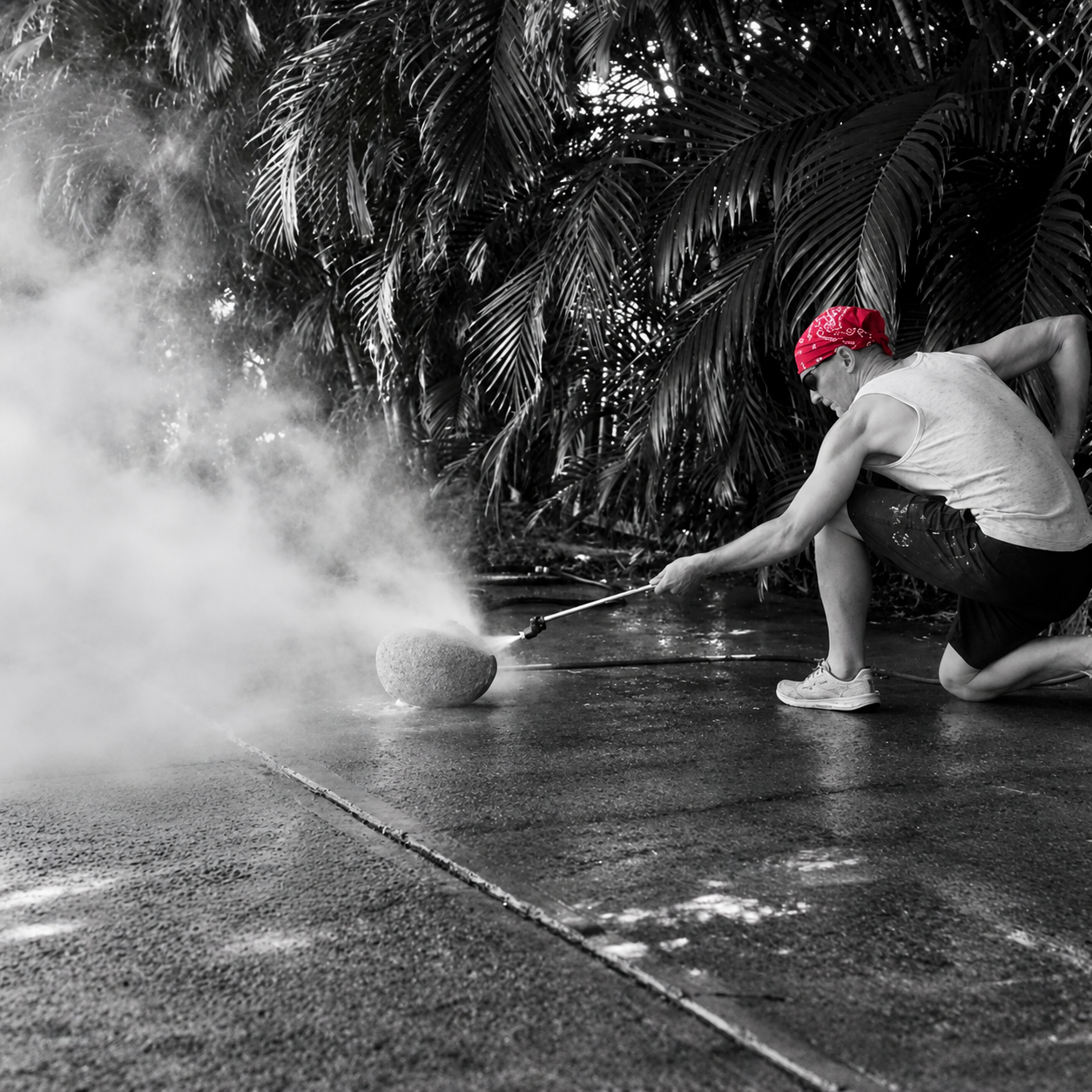
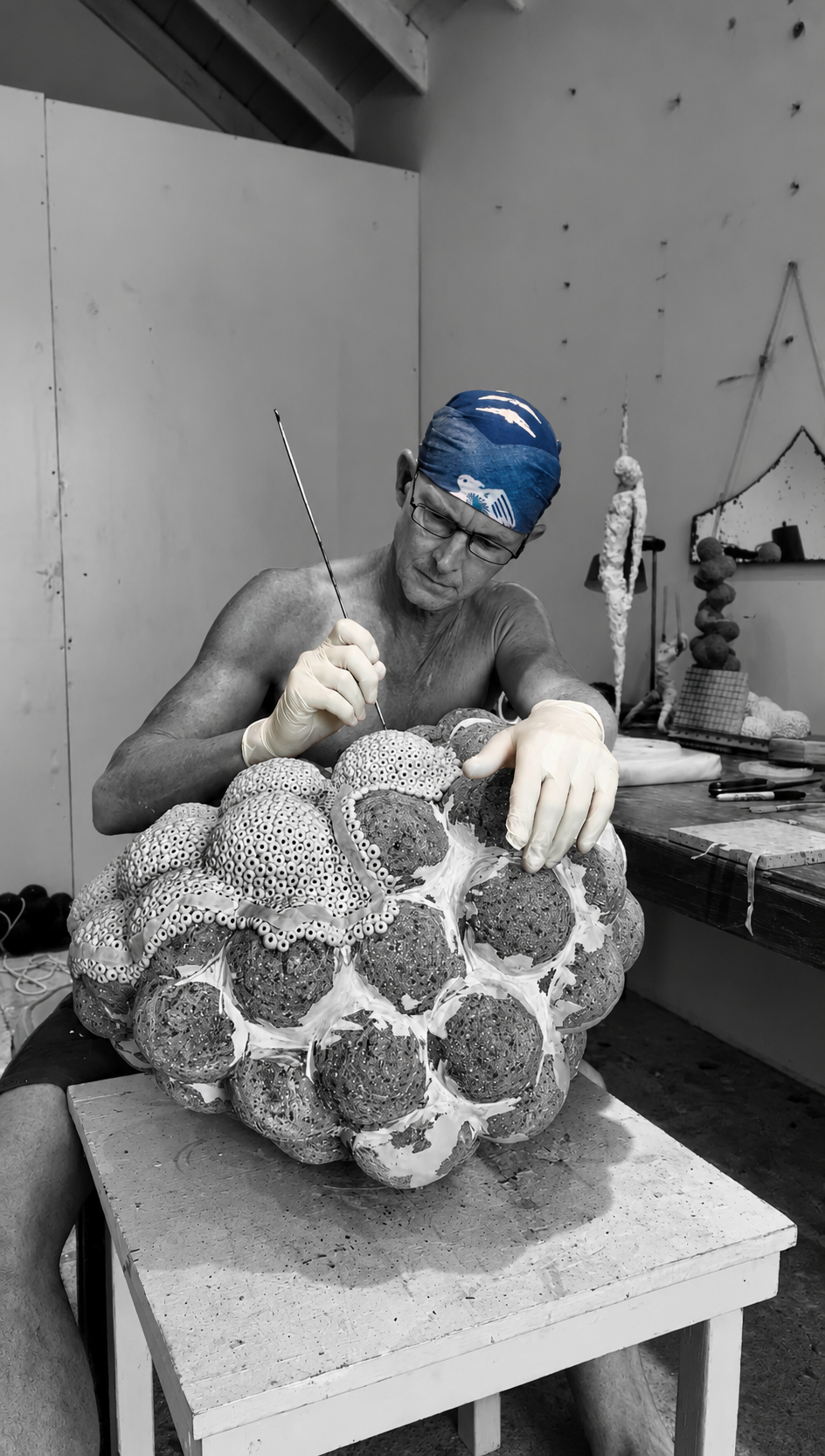
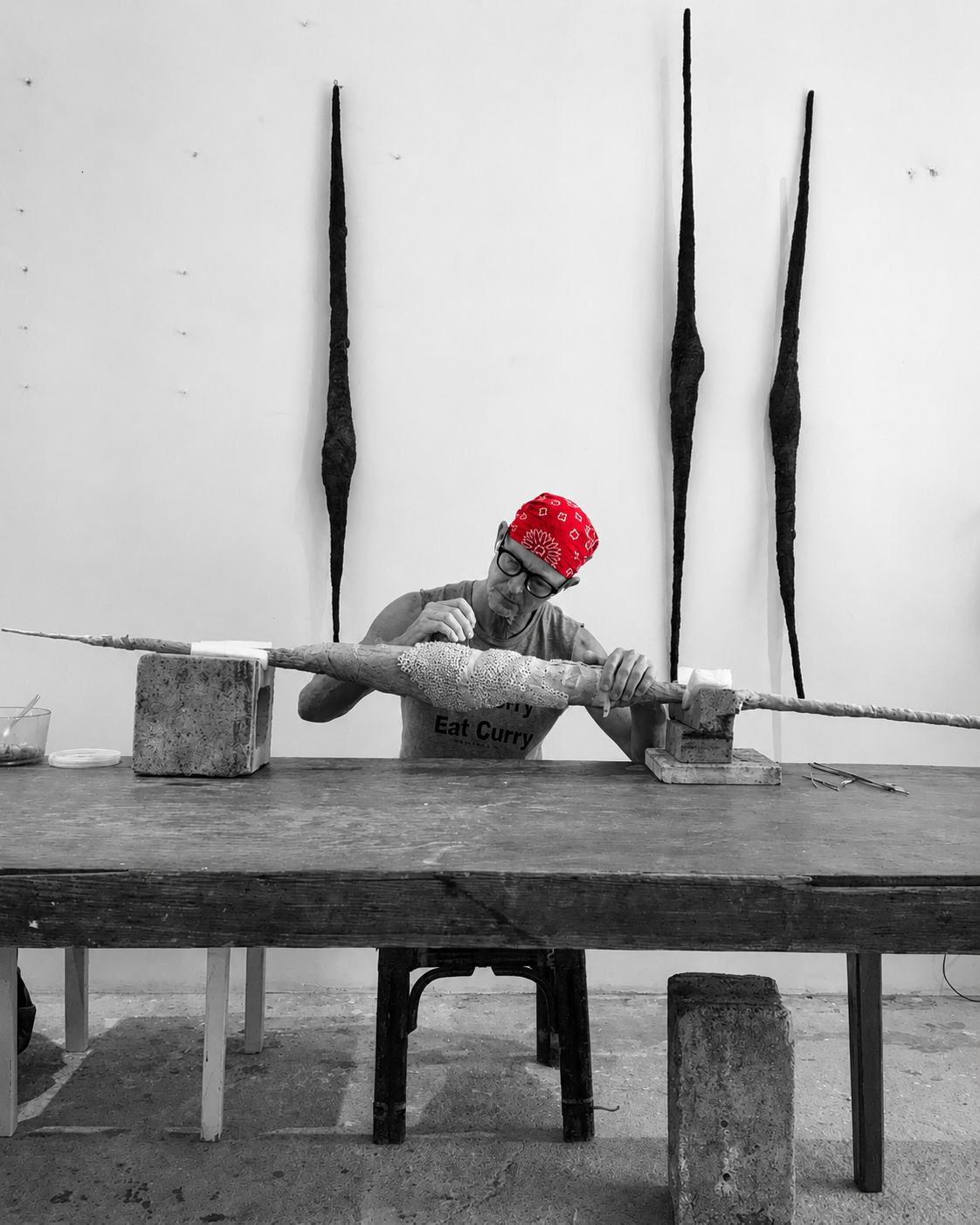
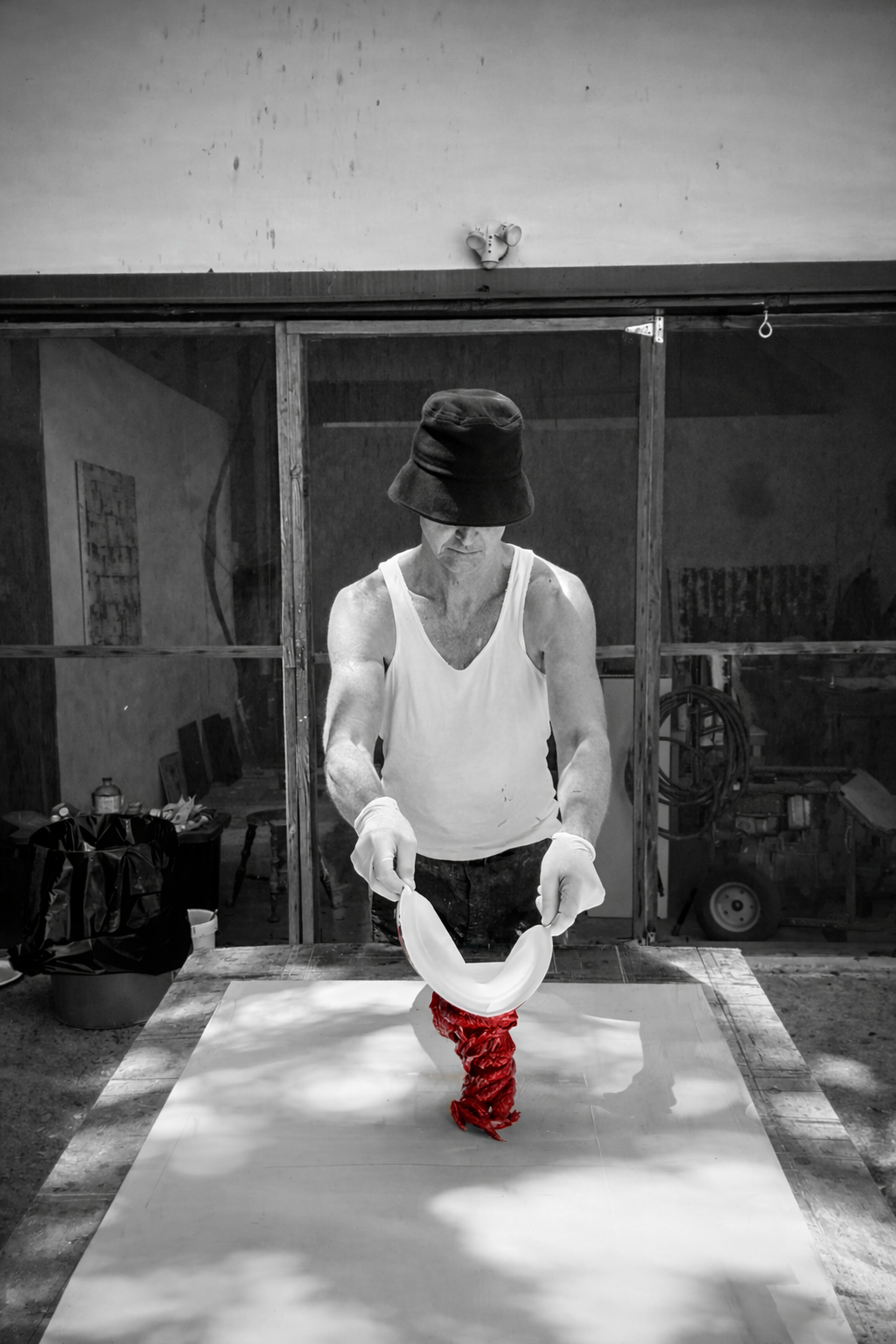
The studio extends beyond a single physical space. The landscape of Nevis functions as both a working environment and a source of material. Volcanic stone gathered from the surface of the island is carved directly or transformed into dust and aggregate, while processes of construction, burial, excavation and abrasion move between the landscape and the more conventional spaces of the studio.Material removed from one work is frequently retained and returned to another. Stone dust becomes surface, structure or aggregate, while recycled wire and metal provide frameworks for constructed forms. Through this circulation, subtraction and accumulation operate simultaneously across different bodies of work. Forms develop through repeated physical operations rather than from a predetermined image. Carving, building, burying, excavating and resurfacing allow material behaviour and the consequences of making to remain visible within the finished work. In this sense, the studio is not separate from the landscape but operates within it, with the island functioning as an expanded site of production. The images shown here document this relationship between landscape, material and process.