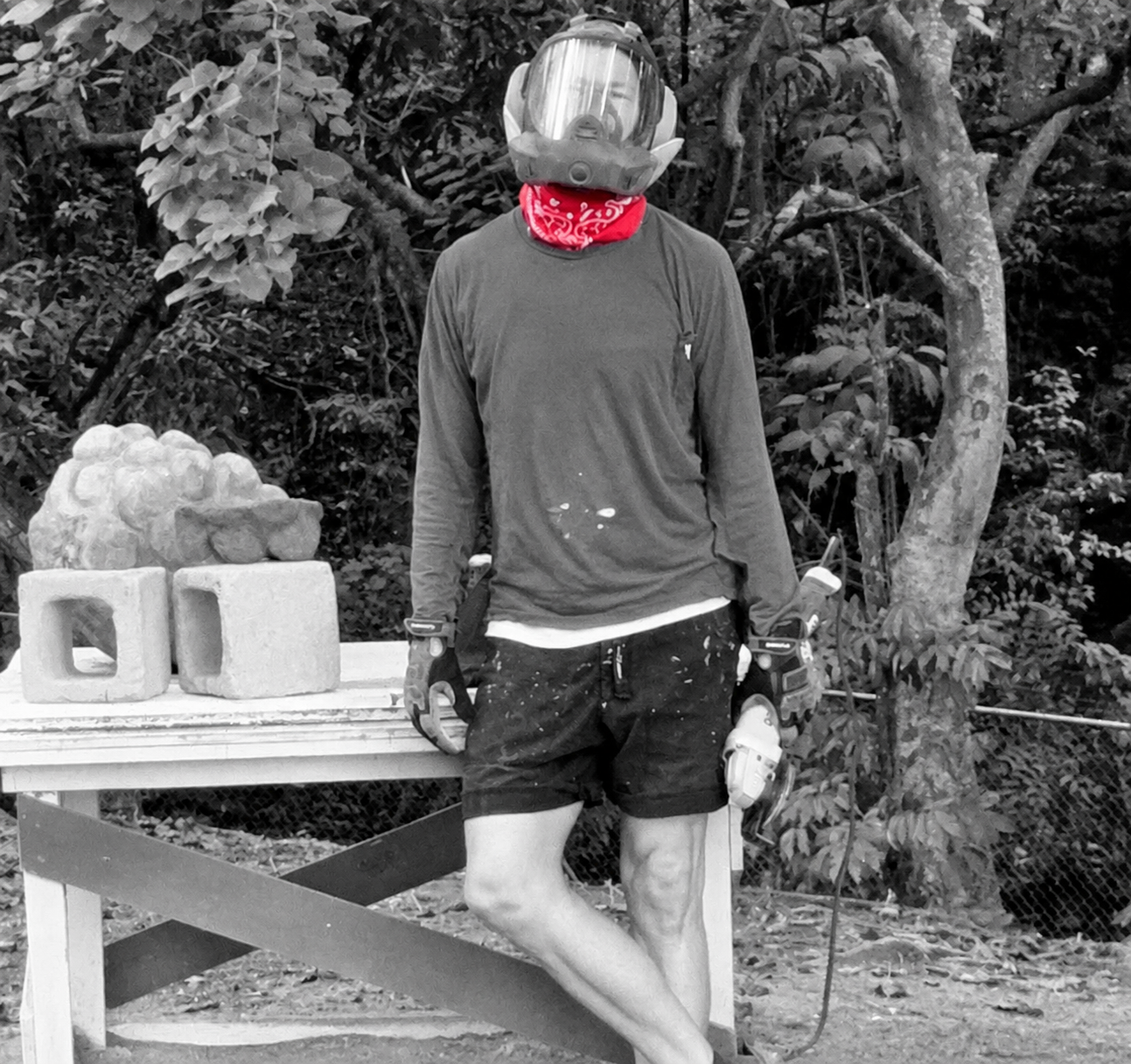
I work from an open-air studio in the West Indies on the island of Nevis, where the landscape functions as an extension of the studio itself. Volcanic stone is gathered from the surface rather than quarried, and much of the carving, cutting and material preparation takes place outdoors. The dust produced through carving is retained and returned to subsequent works, where it becomes both a structural and visual material. Material removed from one object can therefore become part of another. This movement between extraction, accumulation and return connects the sculptural and painted work. In the Sediment paintings, oil, pigment and volcanic stone dust are accumulated in successive layers, then compressed, scraped and removed. The surfaces are not composed in advance, but develop through repeated acts of deposition and abrasion. They can suggest geological sections, compressed landscapes or fragments of terrain without resolving into recognizable images. Across the wider sculptural practice, I work with volcanic stone alongside recycled wire, steel and other found or previously used materials. Bone dust, charcoal, seaweed and other materials gathered from the landscape are also incorporated into certain works, often combined with stone dust, resin and pigment. Geological, biological and industrial matter are therefore allowed to occupy the same object. The studio process is cyclical rather than linear. Materials are gathered, carved, broken down, retained and reused. Painting and sculpture develop alongside one another through accumulation, removal and transformation rather than through a fixed image or predetermined form.