The Fragments extend the material and structural concerns of the larger sculptural work into a reduced scale. Some originate as sections of larger sculptures, subsequently separated and reworked as autonomous objects, while others are constructed independently at this smaller scale. Their forms draw on organic and geological morphologies without reproducing specific natural sources. Repeated cavities, aggregated structures and irregular surfaces establish associations with fruit, seed, mineral, fossil and anatomical formations, while processes of construction and material transformation prevent direct identification. Stone dust, resin and pigment form the primary material language, with recycled metal, bone dust, charcoal and other recovered materials incorporated across individual works. Stone dust generated through the carving of larger sculptures is retained and returned to the studio, allowing the residue of one process to become the material of another. Material is separated, retained and reconstituted rather than treated as the conclusion of a single work. The objects are developed first as sculptures rather than jewellery. They may be installed independently on the wall or temporarily worn on the body. In either condition they remain autonomous objects, while their placement introduces different relationships to scale, movement, proximity and physical contact. At this reduced scale, distinctions between natural specimen, fabricated object, found fragment and bodily ornament become unstable. The body functions as another possible site for sculpture rather than determining its identity or function.
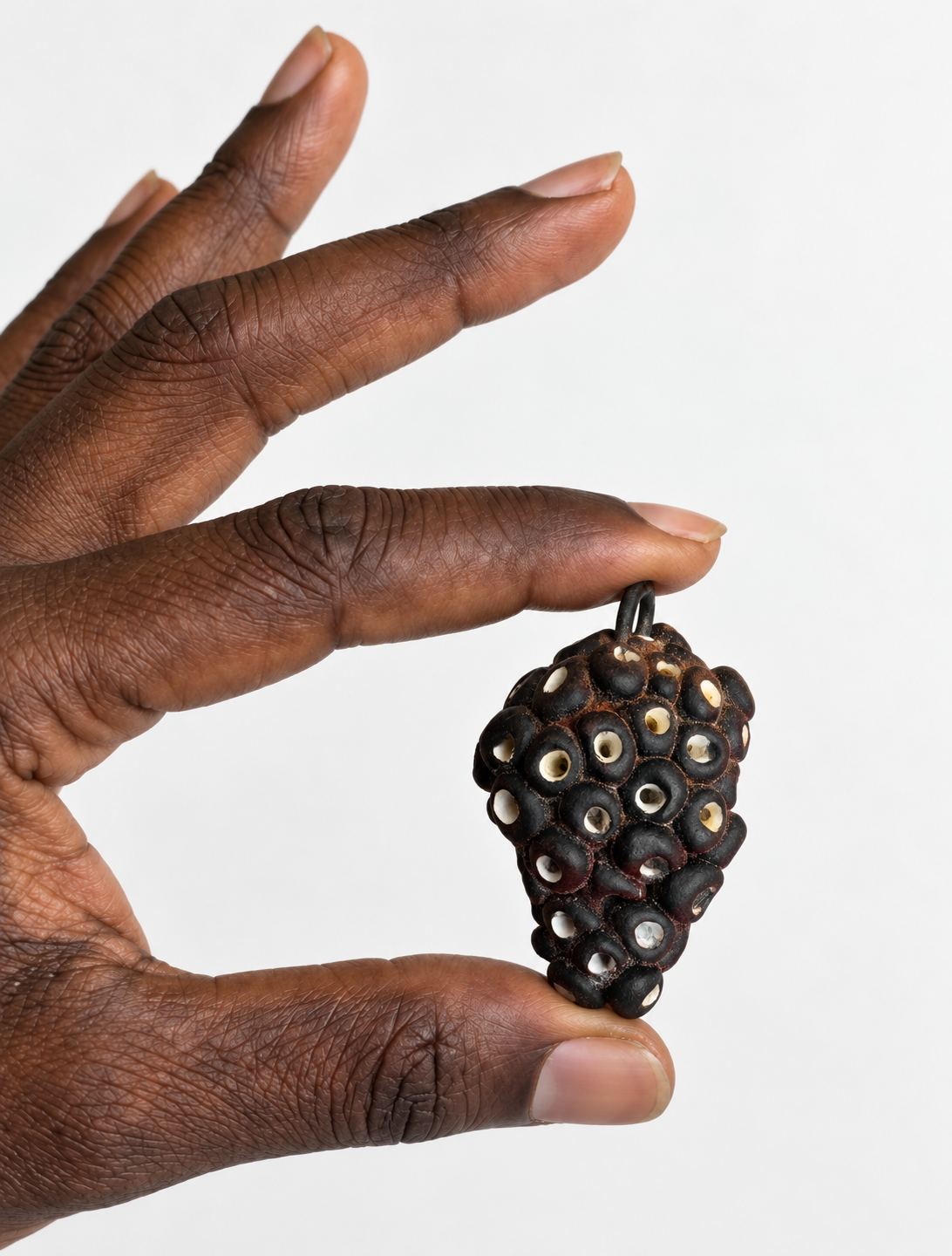
Fragment 01, 2026 stone dust, resin, pigment and recycled metal approx. 2 inch high available. enquire
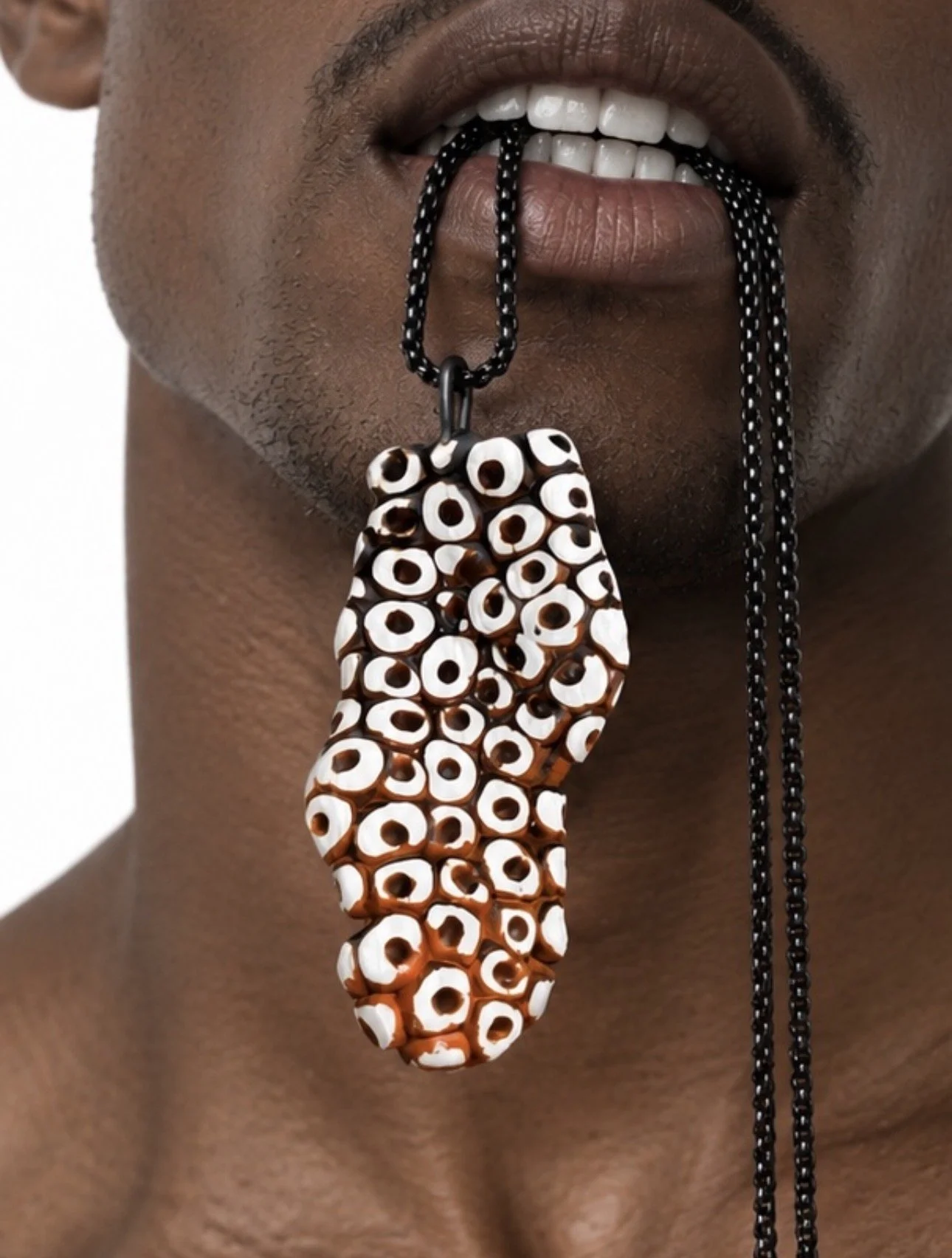
Fragment 03, 2026 stone dust, resin, pigment and recycled wire approx. 1 1/2 x 3 x 1/4 in available. enquire
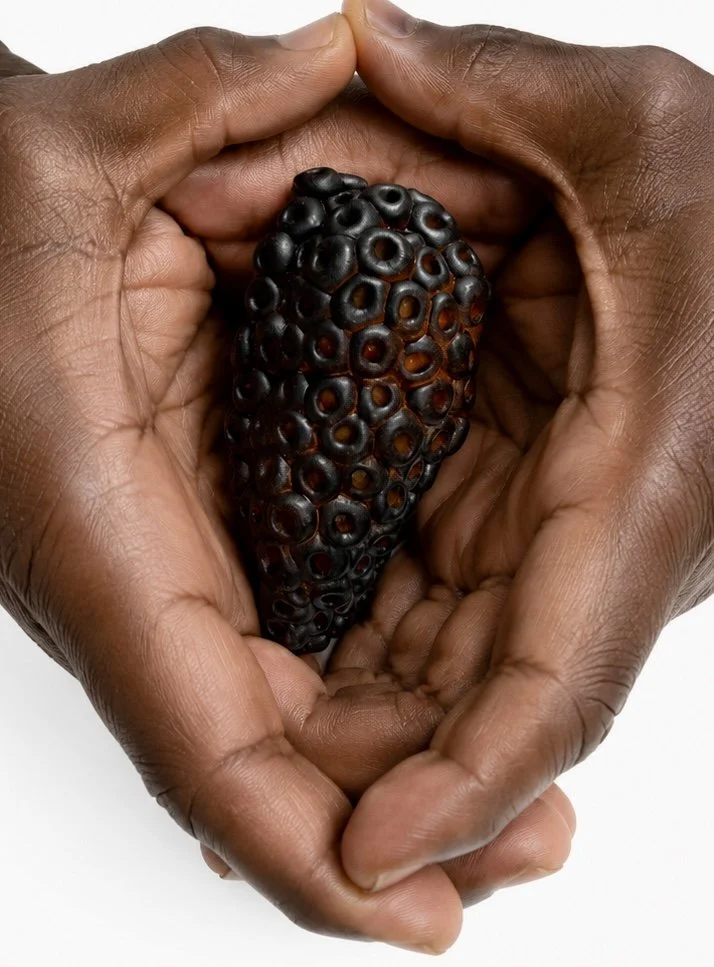
Fragment 04, 2026 stone dust, resin, pigment and recycled wire approx 2 1/4 in. sold
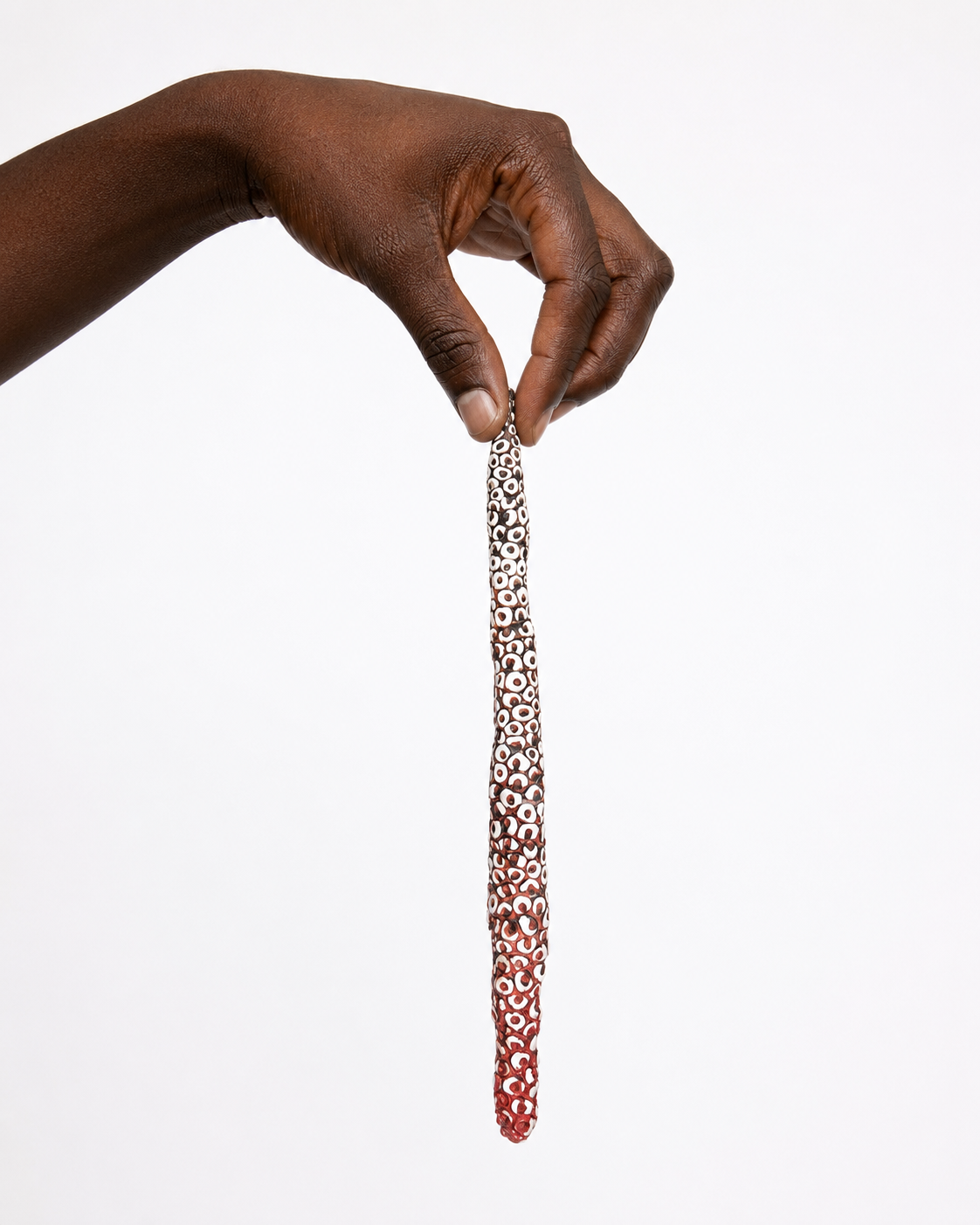
Fragment 05, 2026 stone dust, resin, pigment and recycled wire approx. 6 inch avaiable. enquire
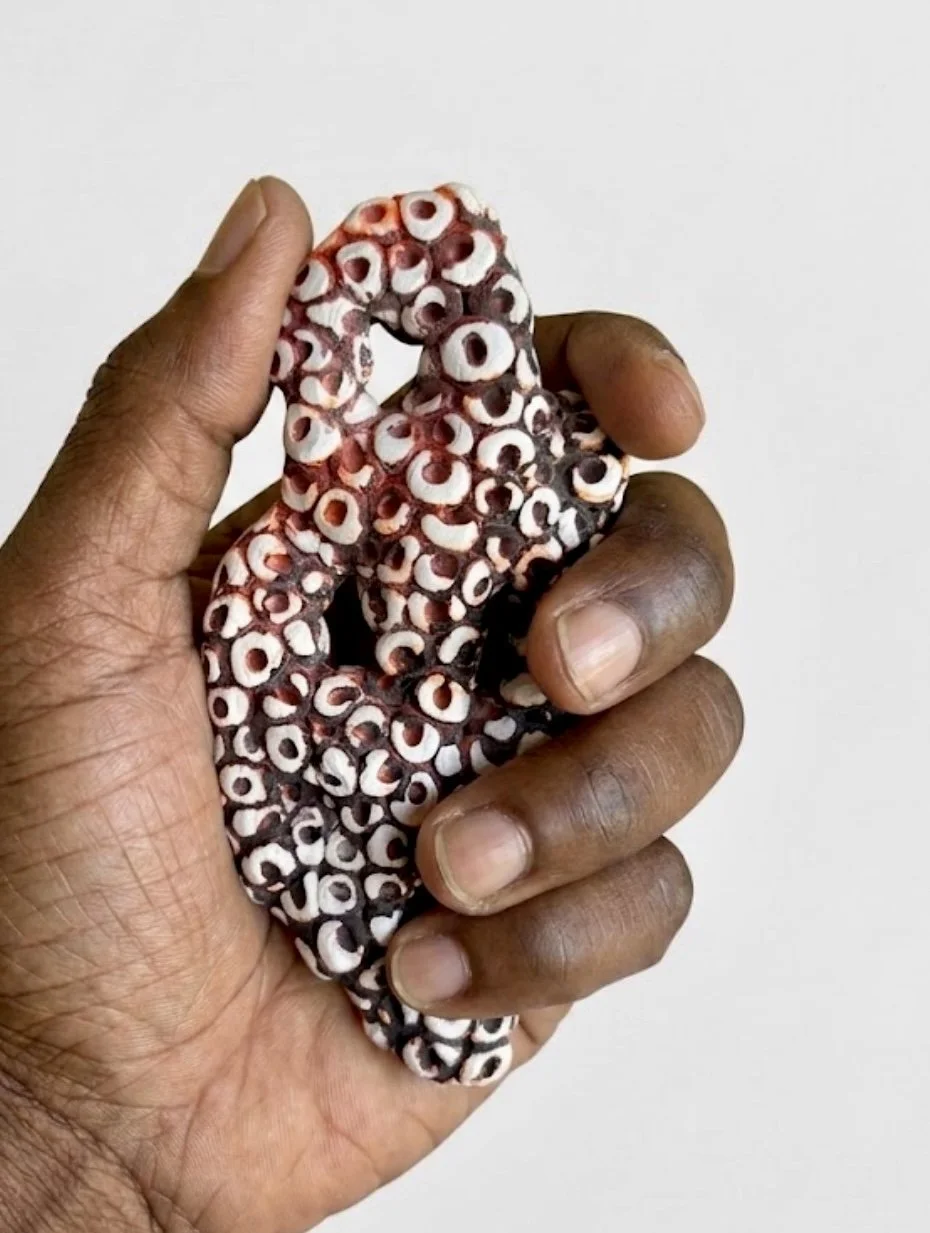
Fragment 06, 2026 stone dust, resin and pigment approx. 4 3/4 in. avaiable. enquire